• info@globalharvestltd.com
  • Unit 8 Brickfield Business Park Gillingham SP8 4PX
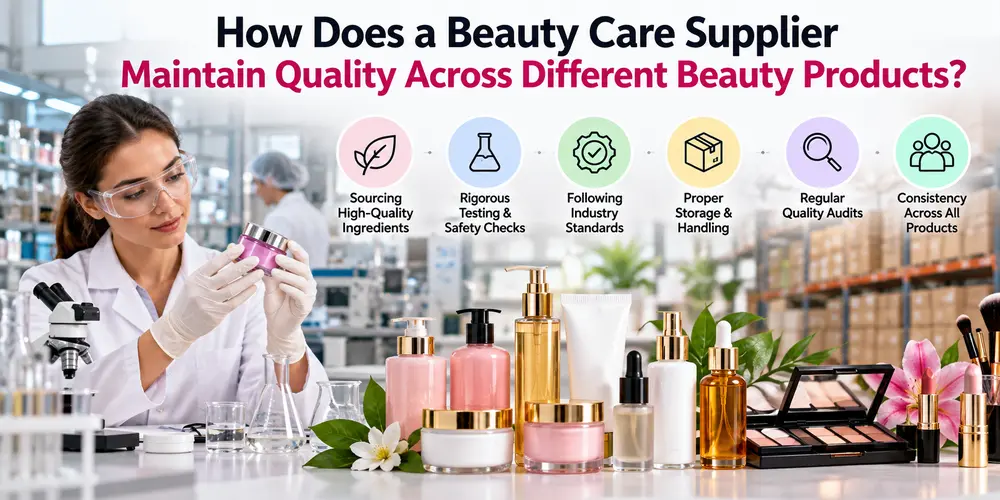
How Does a Beauty Care Supplier Maintain Quality Across Different Beauty Products?
  • Oct 06, 2026

A Beauty Care Supplier sits right in the center of this fast-moving industry where shoppers expect every lipstick, serum, shampoo and moisturiser to do exactly what it says on the tin . Not like a single-product brand, a supplier juggles dozens of categories, and each one comes with its own ingredient’s rules, shelf-life quirks, storage requirements, and safety limits. Keeping quality steady across them all needs solid systems, trained people, and nonstop checking. Companies that use the same discipline across a wider set of services, from an International Food Distributor to a trusted wholesale partner, usually end up with long-term customer trust. Here’s how it plays out in real life.

Tough supplier and ingredient vetting

Quality starts before the product even gets to a warehouse. A good supplier audits manufacturers and checks raw material sources before signing anything. Usually this means

  • Verifying certifications like ISO 22716 (cosmetics GMP) ISO 9001 and cruelty-free claims 
  • Comparing ingredient lists against regional regulations , including UK and EU cosmetic rules 
  • Collecting safety data sheets and certificates of analysis per batch 
  • Doing periodic factory audits, in person or via third-party inspectors 

That same “look first, trust later” mindset shows up with an Agriculture Products Distributor in the UK, who must verify farms and processors before anything enters the supply chain. Whether it’s a face cream or a bag of grain, the idea stays the same: trust the source only after it has been checked.

Batch testing and quality control 

Different product types have different “risks”. Like skincare can get contaminated or separate, haircare can act weird if the pH goes off, and cosmetics can drift in color, feel, or even texture. So a dependable supplier uses tests that actually match the category, not some vague all-in-one routine, usually such as:

  • Microbiological testing to confirm the product is free from harmful bacteria and mould 
  • Stability testing to see how formulas cope with heat, light, and time (without the space there ok) 
  • Patch or dermatological testing to reduce allergy and irritation risks 
  • Physical checks for color, fragrance, viscosity, and packaging integrity (if that last one fails, it’s a problem later) 

Samples from every batch are retained. So if a complaint shows up, the team can trace the exact lot, then retest it. That trace-ability is kind of the line between a serious operation and a casual re-seller, you know.

Smart storage and handling

Even the best formula can get damaged if it’s stored wrong. Beauty products are sensitive to temperature, humidity and sunlight. Reliable suppliers rely on climate-controlled warehouses, first-in-first-out stock rotation, and clear expiry tracking so older units leave first. Fragile glass bottles, aerosol cans, and heat-sensitive creams get special packing and transport conditions. This care isn’t only for cosmetics. A Basmati Rice Wholesale Supplier also has to control moisture and pests to protect grain quality, handle temperature, and keep can integrity during transit. Across industries, careful storage is basically the quiet base layer of repeatable quality.

Standardised processes across many product lines

When you manage lots of product types, nothing can be left to “maybe”. Top suppliers build standard operating procedures (SOPs) covering receiving, inspection, labelling, warehousing, order picking and dispatch. Staff are trained on the same steps, and checklists help keep inspection standards consistent whether it’s nail polish or a body lotion. Digital inventory systems add extra control too. If something goes wrong, affected stock can be isolated within hours instead of days. Also, a Supplier must control moisture and pests to protect grain quality, while Energy Drinks Wholesale Suppliers must manage temperature and can integrity during transit.

Regulatory compliance and accurate labeling

Beauty rules change by country, and they also shift over time. A supplier selling into multiple markets needs to make sure every product shows the correct ingredient lists, warnings, batch numbers, plus the right claims. If a label is misleading, or if a banned ingredient slips in, recalls can happen and reputation can get hit fast, like overnight. Compliance teams monitor regulatory updates, keep product information files, and verify that each item is registered or properly notified where it matters. Strong documentation also reassures retailers, salons, and e-commerce sellers that they’re getting safe, legal stock, not something risky.

Loops and continuous improvement
Quality doesn’t stop once the goods land. Customer feedback, return trends, and complaint patterns show where changes are needed. Smart suppliers review this information regularly, share results with manufacturers, and adjust specifications when required. Diversified businesses benefit here as well. A company that works as an Electronics Manufacturer and Supplier depends on the same test, feedback and refinement cycle to reduce defects. And the same habit fits beauty: improvement is an ongoing routine, not a one-time project.

Conclusion: Choosing the Right Beauty Care Supplier
Maintaining quality across different beauty product types means careful vetting, category-specific testing, controlled storage, standard processes, regulatory compliance, quality packaging, and continuous improvement. A dependable Beauty Care Supplier treats these steps as non-negotiable, because one weak link can drag down the entire range, and affect the buyer’s reputation. When you partner with a supplier that applies high standards similar to what you see in food, agriculture, beverage, and electronics trading, you get consistency, safety, and real peace of mind. If you are after a partner that really carries a disciplined mindset into every shipment, just check out globalharvestltd.com and take a look at how their broad supply can help your business stay steady. 

Frequently Asked Questions (FAQs) 
1. What does a beauty care supplier actually do? 
They source, store, and distribute cosmetics, skincare, haircare and personal care items from approved makers, then they deliver to retailer’s salons and even online sellers. 

2. How do suppliers make sure beauty products are safe? 
They validate the manufacturers, scan the ingredient lists, request batch test paperwork, and keep to cosmetic safety rules before anything lands with customers. 

3. Why is batch tracking so important? 
Because batch codes let a supplier trace each product right back to its source, and remove the affected stock fast if something quality related comes up. 

4. How are beauty products stored to keep quality intact? 
Usually they sit in climate-controlled warehouses, far from direct sunlight, and they rotate inventory so older goods are moved first. 

5. Can one supplier handle more than one product category, reliably? 
Yeah, usually yes, if they keep to standardized procedures, have trained staff , and do quality checks that are specific to each product type, like, properly. 

6. What certifications should you look into? 
Try ISO 22716, ISO 9001, and GMP compliance as well, plus anything cruelty free or organic credentials that fit your market needs, depending on what you actually want in practice. 

7. How do suppliers usually deal with product complaints? 
The better ones document the complaints, re test retained samples, figure out the root cause, then coordinate corrective actions with the manufacturer, without stalling around or adding delays , unnecessarily. 

8. How can you tell if a supplier is actually trustworthy? 
Go through their certifications, request test documentation, look at customer reviews, and pick a supplier with transparent processes, clear communication, and a steady performance record over time.
whatsapp whatsapp