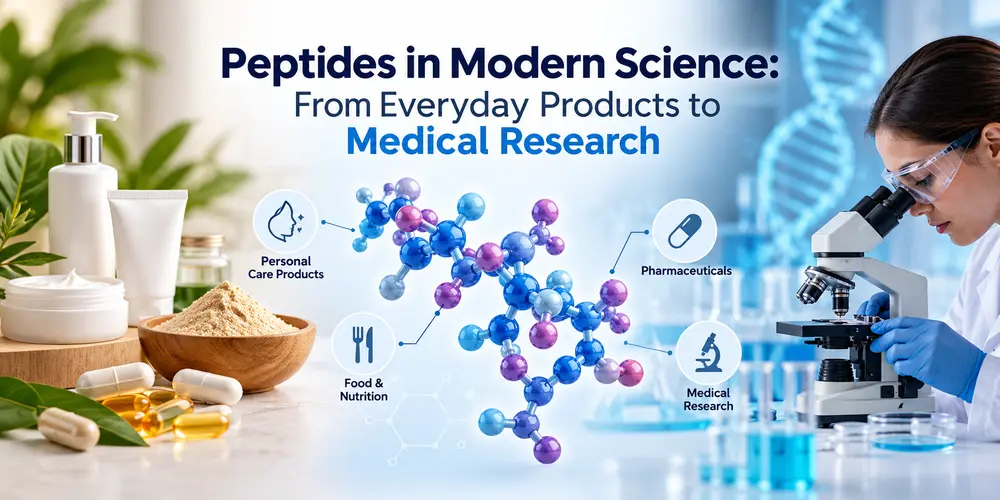
Peptides have quietly become one of the most talked about themes in science, health, and even consumer stuff lately. These short strings of amino acids, the little building blocks that make up proteins, show up everywhere, in the food you eat, the skincare you put on, and in medicines meant for tough, serious conditions. If you’re a researcher, retailer, or business owner eyeing new product lines, knowing peptides lets you see how much they shape modern life. And because global trade is basically speeding everything up, peptides feel more reachable than ever, from a Wholesale Peptides Supplier helping labs, to an International Food Distributor filling shelves with protein rich products that people pick up without thinking too much.
So, a peptide is basically a small molecule made from two up to fifty amino acids, joined together by peptide bonds. When those chains get longer and start folding into more complicated shapes, they turn into proteins. In the body, peptides often act like signaling molecules, sort of giving instructions to cells to repair tissue, regulate hormones, handle infection, or support collagen production. Your body makes a lot of them naturally. Insulin, for instance, is a peptide hormone that helps regulate blood sugar. Other peptides can shift appetite, pain perception, sleep, and immunity. Because the actions are so specific, researchers get interested in peptides for therapy and also for cosmetic uses. During digestion, grains, legumes, and dairy release peptide fragments. And that’s one reason a Products Distributor in UK matters in the nutrition line, since the quality of raw agricultural produce ends up influencing the protein and peptide content that finally reaches consumers.
Most people eat peptides every day, often without realizing it. When you digest protein, enzymes break it down into smaller peptides and amino acids. Some fragments are bioactive, which means they may help with blood pressure balance, muscle recovery, or general gut comfort. Whey Protein Powder is a common example. It comes from milk during cheese making, and it includes peptides plus amino acids that support muscle repair, so athletes and fitness fans tend to rely on it. Hydrolyzed whey goes further, with proteins pre broken into peptides for quicker absorption. Even more basic foods do the job too. Grains, legumes, and dairy all release peptides while digestion is happening. This is another reason a Basmati Rice Wholesale Supplier plays a role in the nutrition chain, because the quality of raw agricultural produce shapes what protein and peptides end up in the consumer’s bowl. There’s also the whole wellness crowding in supplements. Functional fiber like Metamucil is not really a peptide product, since it’s based on psyllium husk fiber, but it still gets used alongside protein heavy diets to support digestive health, showing how modern nutrition mixes multiple components for a more balanced outcome.
Skincare brands have embraced peptides with serious energy. In skincare, certain peptides tell skin cells to produce more collagen and elastin, those proteins that help skin stay firm and springy. Typical categories include:
A newer thing is the Pdrn Pink Peptide category. PDRN, which stands for polydeoxyribonucleotide, is linked with skin regeneration and repair, and it’s caught on in Korean inspired skincare. When it’s paired with peptide complexes, those formulas get marketed for hydration, texture improvement, and a more radiant appearance. For retailers, working with a dependable Beauty Care Supplier helps keep products consistent and tested. Quality control is a big deal here because peptide stability depends on proper formulation, storage, and sourcing, not just marketing claims.
And beyond everyday consumer items, peptides sit near the core of advanced medical research. Their high specificity, plus typically lower toxicity compared with many traditional drugs, makes them interesting therapeutic candidates. Similar to that, an Electronics Manufacturer and Supplier supports the health tech side, supplying instruments, sensors, and devices used for peptide analysis, storage, and wellness monitoring.
Here are a few active areas:
Labs rely on pure and properly characterized materials, and that’s where a trusted Wholesale Peptides Supplier becomes basically essential. If you want reproducible results, you need consistent purity, solid documentation, and delivery you can actually count on.
Behind any peptide product there’s this layered global supply setup. Raw materials move across borders, ingredients get processed, and finished goods pass through wholesalers, retailers, and online platforms. Many businesses also overlap categories. A company that supplies Energy Drinks Wholesale Suppliers networks may also handle protein beverages and sports nutrition, since more consumers want functional drinks enriched with amino acids and peptides. This overlap makes it clear peptides aren’t a small isolated lane. They link food, beauty, pharmaceuticals, technology, and agriculture into one connected ecosystem, kind of all feeding into each other at different levels.
Peptides are kind of proving to be one of the most flexible molecules in modern science, they do a lot of things at once in a way that feels almost too broad. They help with nutrition through products like whey protein, they also boost skincare via PDRN-based formulations and they push research in diabetes, oncology, and infectious disease so basically the list keeps going. As demand rises, the whole need for dependable sourcing and distribution across different industries becomes even more important. If a business wants trusted global supply for food, wellness, beauty, and more, globalharvestltd.com can be a practical starting point.
1. What are peptides in simple terms?
Peptides are short chains made of amino acids, they work as the small “building blocks” for proteins and also as signaling molecules inside the body.
2. What is the difference between peptides and proteins?
Peptides usually have roughly two to fifty amino acids, while proteins are longer, more complex chains that fold into specific three-dimensional structures.
3. Is whey protein powder a source of peptides?
Yes. Whey protein contains amino acids and peptides, and hydrolyzed whey is kind of pre-digested into smaller peptides for quicker absorption.
4. Is Metamucil a peptide product?
No. Metamucil is more like a psyllium husk fiber supplement, used for digestive health, you know, it kind of supports the gut. It can go along with a protein-rich diet, but it does not really include peptides as the key or main active ingredient.
5. What is PDRN Pink Peptide used for?
It’s typically found in skincare formulas, meant to aid skin repair, help with moisture, and give an even looking complexion that feels healthier overall.
6. Why do researchers need a reliable wholesale peptides supplier?
Because consistent purity matters, there should be proper paperwork, and delivery has to be dependable, all of which is essential for accurate and reproducible research results.
7. Are peptides safe?
A lot of peptides are well tolerated, but safety depends on what type it is, the dosage, where it comes from, and the intended use. For any medical application, it’s always smart to talk with a qualified professional.
8. Can one supplier serve multiple industries like food, beauty, and electronics?
Yes, sometimes international distributors handle several categories at once, which makes sourcing and logistics simpler for companies working across sectors.